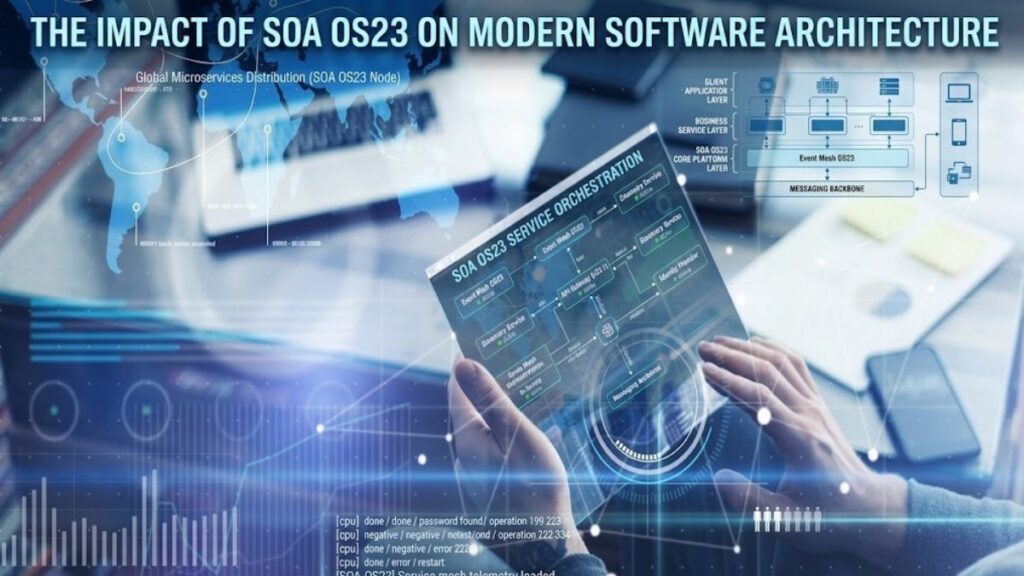
In the rapidly evolving landscape of software development, staying ahead means embracing change. One of the most significant shifts is encapsulated in SOA OS23—a framework that’s redefining how applications are built and integrated. As businesses increasingly demand agility and scalability, understanding SOA OS23 becomes crucial for developers and organizations alike.
This approach not only streamlines processes but also enhances collaboration across teams. With a focus on service-oriented architecture (SOA), this new standard offers innovative solutions to age-old challenges in software architecture. Whether you’re a seasoned developer or just starting out, grasping the implications of SOA OS23 can provide a competitive edge that’s hard to overlook.
Let’s delve deeper into what makes SOA OS23 such an impactful force in modern software architecture today.
Understanding SOA OS23
SOA OS23 represents a significant advancement in the realm of service-oriented architecture. It introduces a framework designed to enhance interoperability and flexibility across software systems.
At its core, SOA OS23 emphasizes modularity. By breaking applications into smaller, manageable services, it allows for easier updates and maintenance without disrupting entire systems.
This architecture promotes seamless communication between diverse technologies. Consequently, businesses can integrate legacy systems with modern solutions more efficiently.
Moreover, SOA OS23 encourages the use of cloud-based resources. This shift supports scalability as organizations grow and adapt to changing market demands.
Understanding these foundations is essential for leveraging the full potential of SOA OS23 in today’s tech-driven environment.
Key Characteristics of SOA OS23 Architecture
| Feature | Description | Impact on Development |
|---|---|---|
| Service Modularity | Applications are divided into independent services | Easier updates and maintenance |
| Interoperability | Services communicate across platforms and technologies | Better integration with legacy systems |
| Cloud Compatibility | Designed to work efficiently with cloud infrastructures | High scalability and flexibility |
| Reusability | Services can be reused across multiple applications | Faster development cycles |
Evolution of Software Architecture
Software architecture has come a long way since its inception. Initially, systems were monolithic. This meant that all components were tightly integrated into a single unit. It worked for smaller applications but quickly became cumbersome as projects scaled.
As the demand for flexibility grew, so did the emergence of modular architectures. These allowed developers to break applications into smaller, manageable pieces or services. This shift marked the beginning of distributed computing models.
With cloud technology and microservices gaining traction, software architecture evolved further. Developers can now deploy updates independently without affecting entire systems.
Agility became paramount in this new landscape. Organizations began adopting practices like DevOps to enhance collaboration between development and operations teams.
Today’s architectures embrace scalability and resilience while enabling rapid iterations through innovations such as serverless computing and containers, setting the stage for even more advancements on the horizon.
Architecture Evolution Overview
| Architecture Type | Key Characteristics | Limitations | Modern Replacement |
|---|---|---|---|
| Monolithic Architecture | Single unified application | Difficult scaling and updates | Modular architectures |
| Layered Architecture | Structured separation of logic | Slower deployment cycles | Microservices |
| Microservices | Independent service components | Complex management | SOA OS23 frameworks |
| SOA OS23 | Highly modular and service-driven | Requires governance strategy | Future-ready architecture |
The Role of SOA OS23 in Modern Software Architecture
SOA OS23 plays a pivotal role in shaping modern software architecture. Its principles promote the development of services that are modular, reusable, and scalable.
This framework allows organizations to break down monolithic systems into smaller, manageable components. Each service operates independently yet communicates seamlessly with others, fostering agility in application development.
With SOA OS23, teams can quickly adapt to changing market demands. They can deploy new features or updates without overhauling the entire system. This flexibility is crucial in today’s fast-paced digital landscape.
Additionally, it encourages the use of open standards and interoperability among different technologies. This opens up avenues for innovation while reducing vendor lock-in scenarios.
SOA OS23 empowers businesses to enhance efficiency and improve their overall software performance. The shift towards this architecture is evident as more companies recognize its strategic advantages.
Benefits of Implementing SOA OS23
Implementing SOA OS23 brings a wealth of benefits to modern software architecture. One significant advantage is enhanced flexibility. Organizations can adapt and scale their services without major overhauls, allowing them to respond quickly to market changes.
Another key benefit is improved interoperability. With SOA OS23, different systems can communicate seamlessly, bridging the gap between legacy applications and new technologies. This compatibility drives innovation and efficiency across teams.
Additionally, SOA OS23 promotes reusability of services. Developers can create modular components that serve multiple purposes, reducing redundancy in code and speeding up development processes.
Cost savings also emerge as a result of streamlined operations and reduced maintenance efforts. Companies see lower operational costs while maximizing resource utilization.
Implementing this framework fosters better collaboration among teams by standardizing communication protocols and practices within the organization. Enhanced teamwork ultimately leads to more robust software solutions tailored to business needs.
Business Benefits of SOA OS23
| Benefit | Explanation | Business Impact |
|---|---|---|
| Scalability | Services scale independently | Handles growth efficiently |
| Faster Deployment | Smaller services enable rapid updates | Shorter release cycles |
| Cost Efficiency | Reduced maintenance and infrastructure costs | Higher ROI |
| Improved Collaboration | Standardized service communication | Better team productivity |
Challenges and Solutions in Adopting SOA OS23
Adopting SOA OS23 can present a variety of challenges for organizations. One major hurdle is the complexity of integration. Many companies struggle to align their existing systems with new services, leading to potential delays and increased costs.
Another significant challenge lies in the cultural shift required within teams. Embracing a service-oriented mindset requires collaboration that may not exist in traditional workflows.
Security concerns also loom large. With more services interacting, there’s an expanded attack surface that needs robust protection measures.
However, these challenges come with viable solutions. Establishing clear governance frameworks can streamline integration processes and enhance compliance.
Training programs play a crucial role in easing the transition for staff members, ensuring they understand both technical aspects and cultural shifts necessary for success.
Investing in advanced security tools designed specifically for SOA OS23 architecture helps mitigate risks while fostering confidence among stakeholders as they navigate this transformative journey.
Case Studies: Companies that have Successfully Implemented SOA OS23
Numerous companies have embraced SOA OS23, showcasing its transformative potential. A notable example is a leading financial institution that streamlined its operations by adopting this architecture. By breaking down monolithic systems into smaller services, they improved efficiency and reduced time-to-market for new products.
Another compelling case is a large e-commerce platform that utilized SOA OS23 to enhance customer experience. With microservices enabling rapid feature deployment, the company responded swiftly to market demands while maintaining high availability.
In the healthcare sector, a prominent organization integrated SOA OS23 to manage patient data more effectively. This approach not only facilitated seamless information sharing across departments but also enhanced compliance with regulations.
These real-world applications of SOA OS23 illustrate how adaptable and beneficial it can be in various industries, ultimately driving innovation and growth.
Future of SOA OS23 and Its Impact on Software Development
The future of SOA OS23 looks promising as it continues to shape the landscape of software development. With its emphasis on modularity, organizations can expect greater flexibility in building applications.
As businesses adapt to changing market demands, SOA OS23 facilitates seamless integration with emerging technologies. This adaptability means that developers can easily incorporate AI and machine learning into their systems while maintaining robust architecture.
Moreover, the rise of cloud-native applications complements SOA OS23’s framework. As companies migrate to cloud environments, they will harness this architectural style for optimized performance and scalability.
Looking ahead, collaboration between teams becomes even more critical. The decentralized nature of SOA OS23 promotes cross-functional teamwork which is essential for innovative solutions.
In essence, embracing SOA OS23 paves the way for a dynamic approach to software engineering. Organizations willing to invest in this paradigm are likely to lead in efficiency and effectiveness amidst rapid technological advancements.
Conclusion
The rise of SOA OS23 marks a significant shift in the landscape of software architecture. As businesses strive for agility and efficiency, adopting this innovative framework becomes increasingly essential. Organizations can streamline their processes, enhance scalability, and foster a collaborative environment by embracing SOA OS23.
While challenges exist—such as integration hurdles and the need for skilled personnel—the benefits often outweigh these obstacles. The case studies highlight successful implementations across various industries, providing valuable insights into best practices.
Looking ahead, SOA OS23 will likely continue to evolve. Its implications for software development are profound. Companies that leverage this approach will be better positioned to meet changing market demands and drive innovation at every level of their operations.
As we navigate this dynamic era in technology, staying informed about developments like SOA OS23 is crucial for any organization aiming to thrive in a competitive landscape.
FAQ: SOA OS23
What is SOA OS23 in software architecture?
SOA OS23 is a modern service-oriented architecture framework that focuses on modular services, interoperability, and scalable cloud-ready application development.
How does SOA OS23 improve software development?
SOA OS23 improves development by enabling modular services, faster deployment cycles, easier integration with legacy systems, and enhanced scalability.
Is SOA OS23 similar to microservices architecture?
While both emphasize modular services, SOA OS23 focuses more on enterprise-level service orchestration and standardized integration frameworks.
What industries benefit most from SOA OS23?
Industries like finance, healthcare, e-commerce, and enterprise SaaS platforms benefit significantly from SOA OS23 due to its scalability and integration capabilities.
Is SOA OS23 suitable for cloud-native applications?
Yes. SOA OS23 is designed to integrate well with cloud infrastructure, making it ideal for building scalable and resilient cloud-native applications.