Introduction
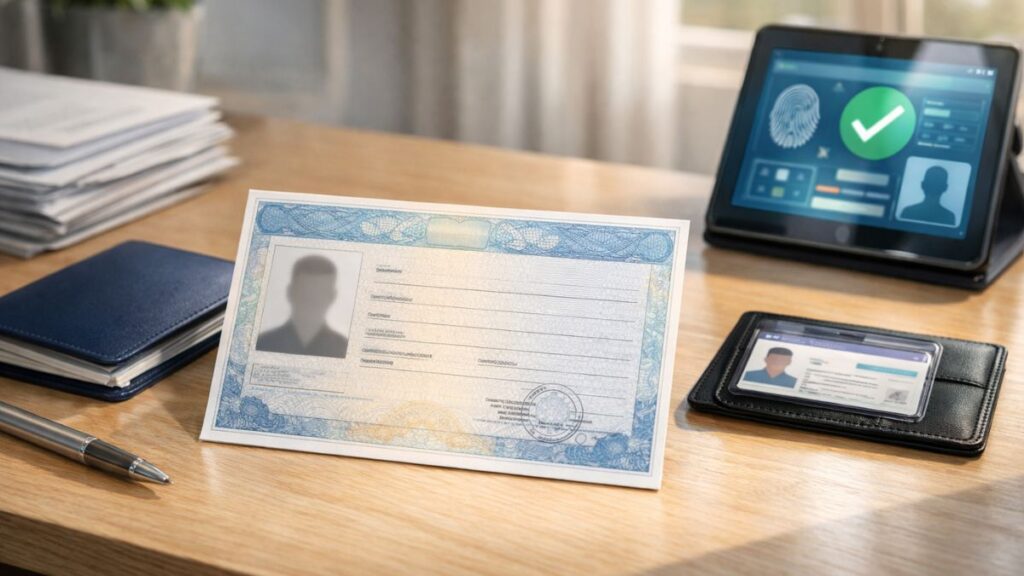
A temporary identity certificate is an official document issued by a government authority to confirm a person’s identity for a limited period of time. It usually serves as a short-term replacement when a permanent identity document—such as a passport, national ID card, or residency card—is lost, expired, or still being processed.
Many people encounter situations where they urgently need proof of identity. For example, someone might lose their wallet while traveling, apply for a new passport, or wait for a replacement ID after theft. In these cases, a temporary document allows individuals to continue performing essential tasks like opening bank accounts, verifying identity, or accessing public services.
This guide explains how a temporary identity certificate works, when it is used, and how you can apply for one quickly and correctly.
What Is a Temporary Identity Certificate?
A temporary identity certificate is a short-term government document confirming an individual’s identity until an official identification card or passport becomes available.
Unlike permanent IDs, these certificates typically have limited validity and restricted uses. However, they are extremely useful during transitions between official documents.
Key Characteristics
-
Issued by government or authorized administrative offices
-
Valid only for a short period (often 30–180 days)
-
Used while waiting for permanent identification
-
Contains basic identity information
-
May include a photo or verification stamp
Typical Situations Where It Is Issued
People often receive a temporary identity certificate when:
-
A passport or ID card is lost or stolen
-
A new identity card application is being processed
-
A citizenship or residency application is pending
-
A person requires urgent identification for legal purposes
-
A refugee or migrant receives temporary legal status
When Is a Temporary Identity Certificate Required?
In many real-life situations, having valid identification is essential. Governments provide temporary certificates to ensure people can still function in society while waiting for their official documentation.
Common Use Cases
A temporary identity certificate may be required for:
-
Travel verification
-
Banking and financial services
-
Employment verification
-
Legal identification
-
Government benefits access
-
Education enrollment
Practical Example
Imagine you apply for a new passport because your old one expired. Processing might take several weeks. If you need to confirm your identity during this period—such as for a job application—the government may issue a temporary certificate.
UA82 Emergency: What Happened, Why It Occurred, and What Passengers Should Know
Types of Temporary Identity Documents
Temporary identification comes in several forms depending on the country and the situation.
| Document Type | Purpose | Typical Validity | Issuing Authority |
|---|---|---|---|
| Temporary Identity Certificate | Identity verification during processing | 30–90 days | Government administration office |
| Temporary Passport | Emergency travel documentation | Short-term travel | Passport authority |
| Provisional ID Card | Replacement while permanent ID is processed | 60–180 days | National ID department |
| Temporary Residence Document | Identification for migrants or residents | Varies | Immigration office |
These documents often include security features to prevent fraud while ensuring quick issuance.
How to Apply for a Temporary Identity Certificate
Applying for a temporary identity certificate is usually straightforward. However, procedures vary by country and government agency.
Step-by-Step Application Process
-
Visit the appropriate authority
This could be a government office, immigration center, or municipal administration. -
Provide identification details
You may need documents such as:-
Birth certificate
-
Expired ID card
-
Passport copy
-
Police report (if ID was stolen)
-
-
Complete the application form
Officials may request personal details like name, date of birth, and address. -
Submit photographs
Some certificates require passport-style photos. -
Verification process
Authorities confirm your identity through records. -
Receive the certificate
In many cases, the document is issued the same day.
Required Documents
| Requirement | Why It Is Needed |
|---|---|
| Identity verification document | Confirms applicant’s identity |
| Proof of address | Verifies residency |
| Application form | Official request for document |
| Passport-style photo | Visual identification |
| Processing fee | Administrative cost |
Benefits and Limitations
Temporary identification is helpful but not always equal to permanent documents.
Advantages
-
Provides immediate identity verification
-
Allows access to essential services
-
Helps avoid disruptions during document processing
-
Useful in emergencies or urgent situations
Limitations
-
Short validity period
-
May not be accepted internationally
-
Some institutions may require permanent ID
-
Limited legal scope
| Aspect | Temporary Identity Certificate | Permanent ID |
|---|---|---|
| Validity | Short-term | Long-term |
| Purpose | Interim identification | Official long-term identity |
| Acceptance | Limited institutions | Widely accepted |
| Security features | Basic | Advanced |
Understanding these differences helps individuals use the document correctly.
Pros and Cons of a Temporary Identity Certificate
Pros
-
Quick access to identification
-
Helps maintain legal identity status
-
Supports administrative processes
-
Useful for emergency documentation
Cons
-
Limited validity
-
Not universally accepted
-
May require renewal if processing delays occur
Common Mistakes When Applying
Many applicants experience delays due to simple errors.
1. Submitting incomplete documents
Missing documents are the most common reason applications get rejected.
2. Incorrect personal information
Spelling mistakes in names or addresses can invalidate certificates.
3. Waiting too long to apply
If your ID is lost, report it immediately to avoid identity misuse.
4. Ignoring expiration dates
Temporary certificates expire quickly and may require renewal.
Best Practices for Using Temporary Identification
To avoid issues, follow these best practices.
Keep the document secure
Temporary certificates are still official documents. Losing them can create legal complications.
Make copies
Keep both digital and physical copies for backup.
Monitor expiration dates
If your permanent ID processing is delayed, renew the temporary certificate before it expires.
Confirm acceptance
Check whether organizations accept temporary documents before presenting them.
Real-World Example
Consider a student studying abroad who loses their passport. The embassy might issue a temporary identity certificate allowing them to verify identity and travel back to their home country while waiting for a replacement passport.
Similarly, someone applying for a national ID might receive a provisional document allowing them to continue working or accessing government services.
Conclusion
A temporary identity certificate plays an essential role in modern administrative systems. It provides individuals with a short-term solution when permanent identification is unavailable, lost, or still being processed.
Although these certificates are not a permanent replacement, they ensure people can continue accessing critical services and proving their identity when needed. By understanding how they work and how to apply for them correctly, individuals can avoid delays and maintain smooth interactions with official institutions.
Whether you’re dealing with lost identification, waiting for a new passport, or navigating immigration processes, temporary identification documents offer a practical and necessary solution.
FAQs
What is a temporary identity certificate?
A temporary identity certificate is a short-term official document issued by authorities to confirm a person’s identity while permanent identification is unavailable.
How long is a temporary identity certificate valid?
Validity typically ranges from 30 to 180 days, depending on the issuing authority.
Can I travel with a temporary identity certificate?
In most cases, temporary certificates are not valid for international travel, though some countries may allow limited domestic travel.
How quickly can I obtain a temporary identity certificate?
Many government offices issue the document within the same day or a few days after verifying your identity.
What happens if my temporary identity certificate expires?
You may need to renew the certificate or wait for your permanent identification to be issued.